Showing posts with label Shuffle Practice. Show all posts

Sunday, April 5, 2009

Shuffle Music: Practice Mix 3. 80's Electro

mix title: 80's Electro
shuffle music genre: electro
purpose: slower tempo for shuffle practice
level: beginners > advanced
speed: 100 -120 bpm average
time: 83 mins approx

The few years from 1983 to 1985 produced an explosion of synth based dance music, that we today collectively call Electro.

It was due to the sudden developments in electronic music techniques with the Fairlight CMI digital sampling and polyphonic synthesisers.

Up until the late 1970's synthesisers could only play one note at a time, but the early 80's saw a burst of synths that could play more than one note, usually no more than 8 notes.

This meant synth players could play chords (groups of notes) something only guitars or pianos/organs could previously do.

So now a synth player could fill a concert hall with a big synth sound, often called a 'stab' for a punchy brassy power chord or a 'wash' for a huge orchestral or ambient backing chord.

Add these with synth sequences, synth drums and some jangly guitar with an infectious danceable funk bass, and electro was born.

Here's a medley of electro tracks played 'live' by all time greats Stevie Wonder and Herbie Hancock, at the 1985 Grammy ceremony in LA (USA) with new kids on the block - and eventually proving to be one hit wonders, Howard Jones and Thomas Dolby. The Jones and Dolby tracks in full are listed below.

Synthesizer Medley 1985

There was a huge controversy about this Grammy performance, which had computers, drum machines, samplers and sequencers. The controversy was whether you could call this sort of set-up a 'live' performance. Even the announcer was a real computer voice introducing the guys.

To many of the rock generation, including the punks, it signaled the end of 'real' music and the beginning of fake plastic machine music that had no soul.

They of course were wrong about the music having no soul. As Stevie Wonder and Herbie Hancock would easily demonstrate both having more than enough 'soul' to share around.

Computers were new at the time, and terrifying to many. Some argued if a computer played the music, it wasn't music at all, and certainly was not live !

Check out this 1983 Today Show (USA) clip with Keith Emerson of ELP (Emerson Lake and Palmer) fame.

Fairlight Keith Emerson (1983)

ELP was best known for their brilliant shuffle rhythm take on Fanfare for the Common Man, at the time.

ELP - Fanfare for the Common Man (1977)


Here's a 1982 vid of Peter Gabriel (former lead singer of Genesis) talking about and demonstrating the Fairlight CMI. Peter actually uses a sledgehammer of sorts to try and smash an old TV screen to sample the sound for his music.

Peter Gabriel and Fairlight CMI (1982)


Here's the legendary Bob Moog talking about the Fairlight CMI and the beginnings of electronic music going back 25 years from 1983. Robert Moog invented the modular Moog synthesiser.

To quote Moog “…I’ve found the Fairlight to be by far, the most intuitively efficient and satisfying tool for manipulating sounds that I’ve ever used, and that includes modular synthesizers…” High praise indeed.


Bob Moog (1983)

In 1983 Peter Gabriel released a monster electro hit called Sledgehammer, using the Fairlight. He also dances in the clip using moves created by Melbourne Sharpies from the 1970's


About 3.30 mins in of this 1983 Sledgehammer vid you'll see Peter doing this Sharpies sideways elbow move, (pic above) really well.

He even gets right down in a bent over position, like the experienced dancers did - the 'how low can you go' move. Not sure where Peter got the moves from, but the guy who produced his first single Salisbury Hill, was Rob McKenzie from brilliant 1970's Melbourne band McKenzie Theory (pic right 1972) - yep saw them live in Melbourne.

Peter Gabriel - Sledgehammer (1983)


Herbie Hancock Demonstrates the Fairlight on Sesame Street


And this is the ground breaking 1983 track Rockit Herbie was best known for at the time.

Herbie Hancock Rockit (1983)


This is an excellent vid with Herbie Hancock explaining and demonstrating the Fairlight CMI to grown-ups this time. The grown up is the legendary Quincy Jones. You get a fantastic run through of exactly what the Fairlight does, without a mouse! It used a light pen, much the same we today use a mouse, except you touched the screen. It's such a delight watching two music greats play with this gear. They have smiles as big as the Sesame Street kids!! Bigger :)))

Herbie Hancock jams with his Fairlight CMI (1983)


Electro brought a new aesthetic to music. Never before in human history had electronic gizmo's been considered musical instruments. (They were usually called special effects units or audio science lab tools.)

But the sounds they made electrified the audience. From clean pure sine wave sounds to nasty noise filtered ring modulators that could bite your ear off, we just could not get enough :)

Oh yeah, and usually there was a singer and the electro tracks became monster hit singles for major Hollywood movies ;) Such as Ghostbusters (1984), Flashdance (1983), Electric Dreams (1984), Never Ending Story (1984), Weird Science (1985) and Ferris Bueller's Day Off (1986)

And if it all got a bit too much for people, we always had the 'Safety Dance' to fall back on. By the satirical genius of Men Without Hats.

Ghostbusters (1984) Maniac (Flashdance)- michael sembello (1983)yello - oooooh yeah (1985) Ferris Bueller's Day Off (1986)

Bananarama - Shy Boy (1983)

Safety Dance- Men Without Hats (1983)

J. Geils Band - Centerfold (1982)

Oingo Boingo "Weird Science" (1985)

(Together In) Electric Dreams - Phil Oakley (1984)

Thomas Dolby - She Blinded Me With Science (1982)

Nik Kershaw - Wouldn't it be good (1984)

Fine Young Cannibals - She Drives Me Crazy (1989)

Tears For Fear -Everybody Wants To Rule The World (1985)

The Politics Of Dancing - Re-Flex (1983)

Never Ending Story ( Limahl ) (1984)

Howard Jones - Like To Get To Know You Well (1984)

The Bangles Walk Like An Egyptian (1985)

Pseudo Echo - Funky Town (1986) Donna Summer - She Works Hard For The Money (1983)

Pointer Sisters - Baby Come and Get it (1985)

Addicted To Love. Robert Palmer (1985) BANANARAMA. VENUS (1986)

Sunday, March 1, 2009

Shuffle Music: The Twist

mix title: The Twist
shuffle music genre: rockin
purpose: to learn The Twist
level: beginners > advanced
speed: slow rock
time: 7 mins

The Twist is a twelve bar blues song that gave birth to the Twist dance craze. The song was written and originally released in 1959 by Hank Ballard and the Midnighters as a B-side to “Teardrops on Your Letter” peaking at 28 on the Billboard Hot 100.


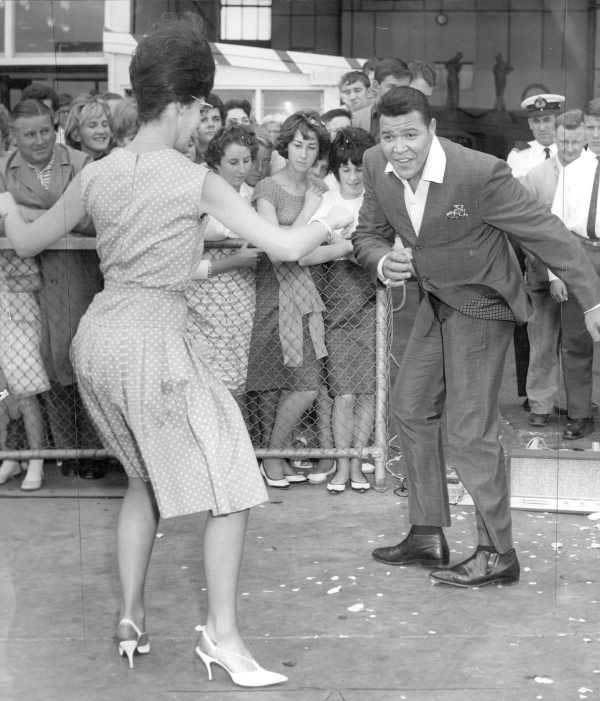
Chubby Checker in Melbourne 1962

The song, and the dance the Twist, was popularized in 1960 when the song was covered by Chubby Checker. His single became a smash hit, reaching number one on the Billboard Hot 100 on September 19, 1960 and then setting a record by being the only single to reach number one in two different chart runs when it resurfaced and topped the chart again on January 13, 1962.

For Shufflers looking for a slow rockin feel, the twist will suit you fine. And it's easy.

Try shuffling to the music as a warm up/warm down track.

Chubby Checker gives a sophisticated and masterly demonstration of the Twist in this 1960 TV clip.


Our good shuffle friend from Russia pcKOT, has sent us this fantastic 1967 Russian movie clip, featuring a short tutorial on how to do the Twist. I wouldn't be surprised if this technique was the inspiration for the Twist in the first place :D  

Сheck it out, Garry, this is the short cut from an old Leonid Gaiday film "Kavkazskaya Plenica" (Kidnapping, Caucasian Style), 1967. Its the first time people in USSR saw this dance, as you can see it also includes a short tutorial =) It was a real cultural breakthrough for those times.


Here's the Ray Charles / Blues Brothers brilliant and infectious homage to the Twist, the Fly, the Swim, the Boogaloo, the Monkey, the Mashed potato... See how many of them you can do.

Ray Charles Blues Brothers - Twist it (Shake Your Tail Feather)

Friday, February 6, 2009

Body Building Shuffle Moves

In Advanced Shuffle Footwork I mention the choreography of Feet Of Flames - Warrior using body building poses as dance moves. The moves are examples of iconic images or gestures which you can use in your shuffle routine to convey meaning in your shuffling.

This can become part of your shuffle vocabulary ( 1 move = 1 word ). How you present that move is called the context. The context in shuffling is the moves before and after the iconic image or gesture. They convey whether you are taking the move in a serious or fun way.

To reverse this for the shuffler, here is a great vid of a bodybuilding contest. This guy uses the standard body building poses, and then expands his pose vocabulary with dance moves.

The person who posted the vid thinks it's a joke, but he's actually very good.

Dance by Bodybuilder


See the similar poses used in Feet Of Flames.

Feet Of Flames - Warriors

Saturday, January 17, 2009

Shuffle Music: Practice Mix 2. Rock

mix title: rock
shuffle music genre: rock
purpose:
to develop upper body and inertia motion.
level:
beginners > advanced
speed: nice and easy 90 -120 bpm
time: 25 mins

Rock is often slower than usual shuffling and uses lots of upper body motion. From simple head banging boogie to complex upper body twists and arm moves.

Melbourne had a very strong and large live pub rock scene in the 1970's. Bands from around Australia and surrounding countries would move to Melbourne to 'make it'.

From Thursday to Sunday nights every week you could choose from over 300 live bands, all with a dance floor in front of the band, where you'd find people rockin.

With such a choice, the competition between bands for good gigs was fierce, and the pub crowds were unforgiving. If you didn't have the crowd on their feet and dancing within 3 songs, you would be booed off stage.

It was tough, raw, exciting and live. This was pre disco, this was rock and roll. This is where Rockin was born.

20,000 hippies, rockers and sharpies would turn up to an all day music festival, dance, get stoned, drunk and arrested (by Police), and call it all a good day out.

The most distinctive Melbourne Rockin style of all time, is that of the notorious early/mid 70's Melbourne clans and crews, called Sharpies.

Sharps, both male and female, were very particular about their appearance. From hair style to shoes, you had to 'look Sharp'!

And when you danced it had to be the sharpie dance, which involves a very distinctive 'elbow blow' move combined with an extreme upper body twist in time with the music.

Often girls would stand in a large circle facing in, all doing the same arm movements at the same time. Guys generally staggered around the crowd.

Footwork was a 2 step shuffle done in massive chunky healed boot like shoes. Check out their style in Greg Macainsh's 1974 film Sharpies. Greg is also the Bass player with Melbourne band Skyhooks , see second clip in the mix below.

Sharpies - Melbourne 1974. Greg Macainsh

ROCK DANCE THEORY

Rock as an oldskool shuffle style did in fact exist, though it was still called stomping. It incorporated traditional Melbourne rock type dance moves such as the Sharpie dance.

Oldskoolers Voodoo Phil and Voiteck using the Sharpie 'elbow' style at oldskool parties Global Village 1993, Every Pic/TVU warehouse 1992. Pic's Garry Shepherd

Rock is an exuberant 'loud' type of shuffle that moves around far more than traditional shuffling, and has far more arm work involved.

It became most popular from about 1993 -1996 when shuffle events had more space in very large warehouses. You had more room to move, swing your hands and arms around, and generally do freeform shuffling, without fear of hitting someone - painful for both you and the person hit.

So compared to the rather confined space of classic shuffling, rockin really stood out with the energy and carefree abandon found at an indie rock gig. As mentioned before, people started saying 'this place is rockin' because of the similarity.

I wont post a bunch of vids showing the style here. I'll leave that up to future posts.

Of more importance is understanding how to dance in a more carefree, freestyle rock like style, using more of your upper body.

You begin with the music ROCK, and you dance to the music.

It's a very physical raw energy dance. You have more of a flow to it, rather than the tight strict steps of hardstyle and classic Celtic dance styled shuffle.

Firstly think of rocking as a movement, you rock backwards and forwards, using the full weight of your body. Like on a swing or in a rocking chair.

It's not the sharp sudden burst like stomping your foot in hardstyle. Your whole body becomes involved, rocking from one position to another.

  • Rock and Roll, was a slang term for having sex in the 1940's/50's, that's what rock means. It was a time when polite society did not say the word 'sex' in public.

You use the inertia of your body mass in rockin.

Inertia in shuffling is like when you spin and your body just wants to keep spinning, it's the weight of your body, your body mass, that's pushing you.

So instead of suddenly stopping with a jolt, you turn that inertia into another move. You use the energy of your moving body to help start a new move.

For it to be the most effective, your next move needs to be physically complimentary.

EXAMPLE: PHYSICALLY COMPLIMENTARY
1. Sit upright in a chair with your hands resting the top of your legs. Bend forward from the waist then return to sitting position.

2. Now add a Physically Complimentary move. Hold your hands to your chest in the sitting position. Then bend forward again, but this time, unfold your arms in time with the bend. Hands on chest at start, arms wide spread when bent all the way over. Then return to sitting position with hands on chest.

You will feel your muscle attention flow from your waist muscles to your shoulder and arm muscles and back again as each set of muscles comes into strength focus. Your waist and arms now compliment each others characteristics.

For most hardstyle shufflers reading now, you will have just discovered another part of the body to dance with :) Imagine what you can do when you combine both the top and the feet.

That gives you a flow to your style. That's how you get smoothness.

The slower music for Rock gives your body time to be smooth, it's way less stressful than hardstyle, letting your muscles naturally stretch and return. It's more organic, where hardstyle is more robotic (in a good way).


MUSIC MIX VIDS

These vids in the mix below are slow paced compared to hardstyle, but are equally danceable. Rock and Roll is after all, first and foremost, dance music!

For shufflers you'll find great ways to use your upper body. Try some of the moves seen in the vids, even the head banging by Canned Heat, to loosen up and strengthen neck muscles.

In fact you will find this mix a real pleasure doing your usual shuffle moves to.

If you are a bit confused about how to shuffle to rock, watch the last vid below, AC/DC Meets Girls Shuffling in Brazil. It is a shuffle remix using the great girls shuffling in brazil footage, to AD/DC's classic 'It's a Long Way To The Top (If You Wanna Rock n Roll)

There is no time changing or stretching between the shuffling footage and the AC/DC track. The girls are originally shuffling to hardstyle, but are shuffling in perfect time to Melbourne pub rock of 1975.

With the rock track, it's the same tempo as most hardstyle, but the bass/kick accent is on every second beat. Not every beat like with hardstyle. So it sounds slower, but you can dance 'double time' to it, as we say in Melbourne.

Try it as a warm up or warm down, or just to get greater fluid motion happening in your style.

You will see glimpses of Melbourne audiences rockin in the aisles to the Skyhooks track - Melbourne 1978. Read more about this banned track in High School Revolution.

BTW- The 1st 4 tracks in the mix, (excluding AD/DC), are what were called Shuffle tracks in rock music at the time. It's distinct for it's syncopated rhythm, a loose shuffling feel with a prominent off beat. Compared to the hard to the floor 1st beat accent of AC/DC's Long way to the top, which was just called Rock.

So have some fun :)

Ian Dury and the Blockheads - Sex & Drugs & Rock & Roll

What ever happened to the Revolution 1975. Skyhooks Live at the Palais (Melb 1978)

david bowie - fashion

On The Road Again - Canned Heat - Montreux 1973

AC/DC meet Brazilian girls shuffling. Melbourne 1975

Shuffle Music: Practice Mix 2. Rock

mix title: rock
genre: shuffle music - rock
purpose:
to develop upper body and inertia motion.
level:
 beginners > advanced
speed: nice and easy 90 -120 bpm
time:  25 mins

Rocking is slower than usual shuffling and uses lots of upper body motion. From simple head banging boogie to complex upper body twists and arm moves.

You rock to get loose or get into the groove as they used to say in Melbourne in the 1970's when Rockin was popular.

Melbourne had a very strong and large live pub rock scene in the 1970's. Bands from around Australia and surrounding countries would move to Melbourne to 'make it'.

From Thursday to Sunday nights every week you could choose from over 300 live bands, all with a dance floor in front of the band, where you'd find people rockin.

With such a choice, the competition between bands for good gigs was fierce, and the pub crowds were unforgiving. If you didn't have the crowd on their feet and dancing within 3 songs, you would be booed off stage.

It was tough, exciting and live. This was pre disco, this was rock and roll. This is where Rockin was born.

The most distinctive Melbourne Rockin style of all time is that of notorious early 1970's Melbourne crews called Sharpies.

Sharps, both male and female, were very particular about their appearance. From hair style to shoes, you had to 'look Sharp'!

And when you danced it had to be the sharpie dance, which involves a very distinctive 'elbow blow' move combined with an extreme upper body twist in time with the music.

Often girls would stand in a large circle facing in all doing the same arm movements at the same time. Guys generally staggered around the crowd.

Footwork was a 2 step shuffle done in massive chunky healed boot like shoes.

Sharpies - Melbourne 1974. Greg Macainsh
 

These vids in the mix below are slow paced compared to hardstyle, but are equally danceable. Rock and Roll is after all, first and foremost, dance music!

For shufflers you'll find great ways to use your upper body. Try some of the moves seen in the vids, even those done by the musicians in the head banging by Canned Heat, to loosen you up.

In fact you will find this mix a real pleasure doing your usual shuffle moves to.

If you are a bit confused about how to shuffle to rock, watch the last vid below, AC/DC Meets Girls Shuffling in Brazil. It is a shuffle remix using the great girls shuffling in brazil footage, to AD/DC's classic 'It's a Long Way To The Top (If You Wanna Rock n Roll)

There is no time changing or stretching between the shuffling footage and the AC/DC track. The girls are originally shuffling to hardstyle, but are shuffling in perfect time to Melbourne pub rock of 1975.

With the rock track, it's the same tempo as most hardstyle, but the bass/kick accent is on every second beat. Not every beat like with hardstyle. So it sounds slower, but you can dance 'double time' to it, as we say in Melbourne.

Try it as a warm up or warm down, or just to get greater fluid motion happening in your style.

You will see glimpses of Melbourne audiences rockin in the aisles to the Skyhooks track - Melbourne 1978. Read more about this banned track in High School Revolution.

You use the inertia of your body mass in rockin.

Inertia in shuffling is like when you spin and your body just wants to keep spinning, it's the weight of your body, your body mass, that's pushing you.

So instead of suddenly stopping with a jolt, you turn that inertia into another move. You use the energy of your moving body to help start a new move.

For it to be the most effective, your next move needs to be physically complimentary.

That's what fluiding is, it's like the energy flows from one part of your body to the next like a fluid. 

That gives you a flow to your style. That's how you get smoothness.

The slower music for Rockin gives your body time to be smooth, it's way less stressful than hardstyle, letting your muscles naturally stretch and return.

So have some fun :)

Ian Dury and the Blockheads - Sex & Drugs & Rock & Roll

What ever happened to the Revolution 1975. Skyhooks Live at the Palais (Melb 1978)

david bowie - fashion

On The Road Again - Canned Heat - Montreux 1973

AC/DC meet Brazilian girls shuffling. Melbourne 1975